
AI-Generated Summary: This article explores antimicrobial stewardship in Jordan from a pharmacist’s perspective, highlighting the country’s progress, ongoing challenges, and the growing role of pharmacists in promoting appropriate antimicrobial use. It also examines how national initiatives and pharmacist-led interventions can help translate stewardship policies into meaningful improvements in everyday practice.

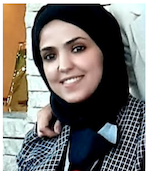
Interviewee: Asma Zinati, PharmD, BCPS, BCIDP

Interviewer: Timothy P. Gauthier, Pharm.D., BCPS, BCIDP
Article Posted 23 August 2026
Antimicrobial resistance has a significant impact on human health worldwide. Antimicrobial stewardship programs serve to combat this, aiming to enhance the safety and appropriateness of antimicrobial drug use. While there can be geographical variability in regards to which resistance threats are greatest in a given location, we all have many shared foes which routinely impact us. Microbes do not respect man made borders and can easily be transported across vast distances in today’s interconnected world.
Sharing our stories, experiences, and perspectives is one of the best ways to raise awareness about antimicrobial resistance and help others evolve their antimicrobial stewardship practice.
This article is part of an ongoing series we launched in 2019 about antimicrobial stewardship around the world. Other countries covered thus far include Nigeria, India, Bangladesh, Uganda, Thailand, Japan, Costa Rica, Australia, New Zealand, Canada, Spain, United Kingdom, Turkey, and Pakistan.
Not long ago I connected with Dr. Zinati who is an antimicrobial stewardship pharmacist in Jordan. She was kind enough to agree to offer her perspective in the latest edition in the series. Here we dive into antimicrobial stewardship in Jordan, providing a pharmacist’s perspective. She is an inspiring person, I am sure you will enjoy this interview very much.
Please, tell us about yourself.
I am a Senior Clinical Pharmacist in Internal Medicine at Al-Bashir Hospital. I earned my Doctor of Pharmacy (PharmD) degree from the Jordan University of Science and Technology, and I am a Board Certified Pharmacotherapy Specialist (BCPS) and Board Certified in Infectious Diseases Pharmacy (BCIDP).
If you ask me who I really am at the bedside, I will tell you this: I am not just a healthcare provider. I am a designer. When I prescribe an antibiotic or draft a pharmaceutical care plan, I do not just pull a guideline off the shelf. I take out my measuring tape, I look at my patient, and I tailor the therapy like a custom-made suit — one that fits their culture, their values, their cost realities, and their microbiology. That is what I teach every junior pharmacist and every prescriber I work with: guidelines give you the fabric, but you are the one who must sew it to fit the patient.
My days are spent in the details alongside my clinical pharmacist colleagues and physicians. Together, we review cases on a daily basis — reassessing antibiotic orders, adjusting doses, switching from IV to oral, interpreting cultures and susceptibility reports, and making real-time interventions. Beyond the bedside, I am responsible for tracking and reporting our antibiotic consumption and resistance data, leading meetings to build new policies and strategies, and reporting our stewardship metrics to drive real change. As Secretary and Leader of our AMS Committee, I also carry the bigger picture: bi-annual strategy meetings and the constant effort to build a culture where antibiotics are respected as the precious, finite resource they are.
How did you get involved in antimicrobial stewardship as a pharmacist, and what path did you take to reach where you are today?
If I am being honest, my path into AMS did not begin with a textbook. It began with grief.
There is a particular kind of helplessness that stays with you — watching a patient slip away from a hospital-acquired multidrug-resistant infection, knowing that if you only had access to a novel beta-lactam, or if someone had narrowed that spectrum three days earlier, the ending might have been different. I have lived that moment more than once. And what broke my heart also lit a fire in me: antimicrobial resistance is not like other adverse drug events. It does not stay contained to one patient. It walks out of the hospital and into the community. It spreads. That realization became my daily drive.
My formal entry into AMS came around 2018, when the Jordanian Ministry of Health, in collaboration with the World Health Organization, launched a national antimicrobial stewardship initiative. They conducted workshops across the country and carried out Point Prevalence Surveys in Jordanian hospitals to see exactly where we stood. The results were sobering — broad-spectrum antibiotics were being prescribed at alarming rates, and the gaps in structured stewardship were impossible to ignore.
I was selected, alongside a colleague, to represent our hospital. We traveled to Dubai for advanced AMS training through the British Society for Antimicrobial Chemotherapy (BSAC) Middle East collaborative. That training changed everything. We did not just learn theory; we were tasked with designing real, tailored hospital action plans that we could bring home and actually implement.
When I returned, I was appointed Secretary of the AMS Committee at the Internal Medicine Hospital. I remember sitting down with a blank page, drafting our first action plan, building the committee structure from the ground up, and thinking: This is it. We are starting something.
Then, of course, the world stopped. COVID-19 hit, and our implementation paused. But in 2021, we came back. And when we did, I chose a “Start Smart” approach — not trying to boil the ocean, but focusing on high-impact units first, educating physicians, narrowing spectra where we could, and proving that stewardship could work even with limited resources.
Today, there is no turning back. AMS is not a project to me anymore. It is a purpose.
What is antimicrobial stewardship like in Jordan today, based on what you see in your practice?
Antimicrobial stewardship in Jordan is no longer a voluntary extra or a personal initiative of a few motivated individuals — it is formally mandated and nationally coordinated. Our current efforts operate under an official National Action Plan on Antimicrobial Resistance (2023–2025), developed by the Ministry of Health with support from the WHO Country Office in Jordan, and launched under the royal patronage of Her Royal Highness Princess Muna Al-Hussein. The Minister of Health, Professor Dr Feras Hawari, personally launched the plan on her behalf, which tells you something about the level of political commitment behind it. This is very much a government-driven initiative, not a side project.
What makes me especially proud is that Jordan is only the second country in the WHO Eastern Mediterranean Region — after Saudi Arabia — to endorse a second edition of its AMR national action plan. Our first plan ran from 2018 to 2022, and the new one was built deliberately on its lessons: the implementation gaps we identified, and the successes we achieved. To me, that signals maturity. We are not starting from scratch; we are building on experience.
The plan itself is built around five themes that shape everything we do: raising awareness, strengthening surveillance, preventing infections, rationalizing the use of antimicrobials, and supporting AMR research. And it is not just policy on paper. At the same launch event, the Ministry released the National AMR Surveillance Report 2022 and updated National Guidelines for Infection Prevention and Control — so our stewardship work is backed by real data and clinical standards, not only good intentions.
If you ask me who the key players are, the picture is genuinely collaborative. The Ministry of Health leads the national strategy, the WHO Country Office provides technical and strategic support, national stakeholders were engaged through a participatory consultation process, and international organizations collaborate with us under the One Health umbrella. But at the hospital level — where stewardship actually happens — the picture is clear: a published national evaluation found that every AMS focal point in Jordan’s public hospitals is a pharmacist or clinical pharmacist. We serve as the secretaries of hospital AMS committees, and in many ways we are the operational backbone of the whole national effort.
So, to set the stage: Jordan’s AMS landscape is structured, government-mandated, and regionally advanced. We have a second-generation national action plan, defined stakeholders, surveillance systems, and a One Health approach — and clinical pharmacists at the hospital level are the ones making that strategy work in practice, day after day.
What are pharmacists doing in Jordan to foster safe and appropriate antimicrobial use?
In Jordan, antimicrobial stewardship isn’t just something pharmacists participate in — it’s something we architect. If you walk into any governmental hospital under the Ministry of Health, you’ll find that the beating heart of every AMS committee is a clinical pharmacist. We are not merely members at the table; in many ways, we built the table.
The Stewardship Ecosystem: Clinical Pharmacists as the Engine
It has become the norm — not the exception — for clinical pharmacists to lead stewardship efforts. In our hospitals, the AMS focal point is a clinical pharmacist, and behind every successful program stands an AMS secretary, often a clinical pharmacist, who is truly the unsung hero orchestrating the entire operation. This isn’t a side project; it’s embedded in our professional identity.
Our interventions are hands-on and daily: we perform dose adjustments, guide antimicrobial selection, evaluate appropriateness of therapy, conduct audits, and manage pre-authorizations for restricted agents. But we don’t stop at the clinical decision. We are the ones tracking consumption patterns, auditing compliance, reporting outcomes to committees and leadership, and convening the meetings that keep the momentum alive. We don’t just advise — we document, we follow through, and we hold the system accountable.
The Frontline Gatekeepers: Every Pharmacist Has a Role
Stewardship in Jordan isn’t siloed to a select few “stewardship pharmacists.” While clinical pharmacists design the strategy, all pharmacists play a critical role in execution. Take the dispensing pharmacist, for instance — they are the final checkpoint in a chain of safety. In our hospitals, high-risk and reserve antibiotics don’t simply pass from prescriber to patient. They move through a controlled pathway: the physician or specialist initiates the request, the AMS protocols define the criteria, and the clinical pharmacist approves — but the dispensing pharmacist is the one who ensures the order aligns with the approved pathway before the medication ever reaches the patient.
They follow the rules set by the AMS committee with precision, acting as the last line of defense against inappropriate use.
The “Red Line” Antibiotics: Where Pharmacists Hold the Keys
Perhaps one of the most powerful illustrations of our role is how we manage high-risk and reserve antibiotics. These are not drugs that can be prescribed casually. There is a formal rule: a physician or specialist must justify the need, the AMS committee’s criteria must be met, and a clinical pharmacist must approve it. The dispensing pharmacist then verifies this approval before release. In this way, pharmacists don’t just support stewardship — we enforce it at the point of access. We are the backbone that keeps the entire structure standing.
Training, Leadership, and the Road Ahead
We also carry the responsibility of educating — training our colleagues, updating protocols, and translating surveillance data into actionable change. In Jordan, when you ask who is improving antibiotic use, the answer is increasingly: the pharmacists. We are the heroes of the story not because we seek the spotlight, but because the system simply doesn’t work without us.
What is the most pressing antimicrobial stewardship issue in Jordan today?
Closing the Gap Between Policy and Daily Practice — From the Community Pharmacy to the Hospital Bedside
If I had to identify the single most pressing antimicrobial stewardship challenge in Jordan today, it would be the continued dispensing of antibiotics without a prescription in community pharmacies.
Our legislation is clear — antibiotics should only be dispensed with a prescription — yet studies tell us this practice is still common. In one simulated-patient study conducted across Jordanian pharmacies, nearly three out of four pharmacies dispensed antibiotics without a prescription [1]. More recent research helps us understand why: inspections are infrequent, there is no unified digital prescription system to prevent “pharmacy shopping,” and community pharmacists face real economic pressure alongside strong patient demand and limited public awareness — a combination that can leave the most compliant pharmacy at a disadvantage [2].
At the national level, the evaluation of our first AMR national action plan also showed uneven implementation across sectors, with gaps in awareness activities, surveillance integration, and research [3][4]. Within hospitals, a national evaluation found that while nearly all public hospitals have established AMS committees led by pharmacists, adherence to the core elements of stewardship — leadership commitment, resources, monitoring, and feedback — remains a work in progress [5].
However, I have seen firsthand that this gap can be closed when stewardship is treated as a non-negotiable operational standard rather than a voluntary initiative.
When I launched our AMS program at the Internal Medicine Hospital in early 2021, I began alone, part-time, with no budget and no administrative support. Antibiotics were prescribed on autopilot — ceftriaxone was given to stroke and acute coronary syndrome patients simply because of stress leukocytosis. I started with a baseline Point Prevalence Survey, then focused on the Cardiac Care Unit, building trust through daily presence rather than confrontation.
Our strategy rested on two backbone interventions: preauthorization for all reserve antibiotics — positioning clinical pharmacy as a “bodyguard” rather than a gatekeeper — and daily prospective audit with real-time feedback during morning rounds [6,7]. We integrated an antibiotic documentation form into our Hakeem EMR, created a dedicated team WhatsApp group for rapid communication, and tracked every culture result.
The results were measurable and sustained. Over 13 months, inappropriate prescribing without indication fell from 40% to 20% — a 50% reduction, with an interim drop to as low as 7%. Ceftriaxone, our most overused antibiotic, dropped from 15.71% to 6.69% of total consumption (a 57.4% decrease). Carbapenem use fell by 65% and vancomycin by 71%, while cefepime — a narrower, more targeted option — rose appropriately. Perhaps most importantly, culture-based prescribing increased from 40% to 62%, and definitive therapy rose from just 5% to 21%.
But the outcome I treasure most was cultural: residents began stopping antibiotics before I even arrived on rounds, nurses started reviewing antibiotic orders with physicians to decide whether to continue or deescalate, and pharmacists independently began questioning inappropriate prescriptions. That is when you know stewardship has taken root.
The lesson for Jordan is this: our most pressing national issue is not a lack of policy or knowledge — it is turning policy into consistent, everyday practice at the point of care. My experience has shown me that even a single pharmacist, using preauthorization and daily prospective audit as non-negotiable pillars, can transform a hospital’s antibiotic culture in under a year. The challenge now is scaling that same discipline — digital tracking, protected pharmacist authority, and daily accountability — beyond hospital walls and into the community, where much of the inappropriate use still takes place.
What are a few of the most important lessons you have learned working as an antimicrobial stewardship pharmacist in Jordan?
Over the years, I have learned several lessons that have shaped how I practice. If I were to share advice with other pharmacists entering this field, these would be the most important:
1. Antibiotic therapy is a design process, not a checklist
The biggest lesson I have learned is that effective antimicrobial therapy must be individualized. You cannot simply rely on the name of the pathogen, a guideline, or a standard protocol. When I write a pharmaceutical care plan and select an antibiotic, I see myself as a designer. My decision incorporates the site of infection, local resistance patterns and the antibiogram, and — crucially — the patient in front of me. I consider their history: Have they been colonized before? What antibiotics have they recently received? What comorbidities do they have? All of these factors play a role. The pathogen is only one piece of the puzzle; the patient is the picture.
2. Do not wait for the perfect moment to start
Another hard-earned lesson is that you cannot wait for ideal circumstances, more staff, or better resources before you begin your stewardship work. Even with limited resources and significant challenges, start with one area where you can make a real impact. Focus there, act on it, and let the results speak for themselves. Momentum builds from action, not from waiting.
3. Stewardship is a team sport — one hand never claps
You cannot do this alone. From the beginning, share the vision and raise awareness among everyone involved. Infection control must be active and have a voice. Nurses have a vital role in reminding physicians and ensuring compliance. Physicians must own the clinical decisions, and pharmacy must drive the policy and oversight. Everyone who touches the patient has accountability. Do not let antimicrobial stewardship become “your” plan; make it our plan.
4. Novel antibiotics will not save us — stewardship will.
I have learned that we must treat antibiotics as a shared, finite resource. The more we use them carelessly, the faster we lose them. Newer agents are not the solution to resistance; they are only temporary tools. What we truly need is robust antimicrobial stewardship and, just as importantly, the implementation of policy. In Jordan, as in many places, we still face a significant gap between writing a policy and actually putting it into daily practice. Closing that implementation gap is where the real work lives.
A final thought for fellow pharmacists: Be patient, be persistent, and remember that your role is not just to restrict antibiotics, but to ensure the right patient receives the right drug at the right time for the right duration. That is the heart of stewardship.
Lastly, what do you think the future holds for antimicrobial stewardship in Jordan?
I am optimistic about the future of antimicrobial stewardship in Jordan because we have already built a strong foundation. We have national policies, a surveillance system, and a growing community of clinical pharmacists who are doing excellent work. But to move forward, we need to turn what exists on paper into daily reality — and that requires more resources, more accountability, and more people at the table.
First, we must increase awareness among all healthcare providers, especially in governmental hospitals.
I work in a tertiary governmental hospital, so I see this firsthand. The clinical pharmacists in these facilities are the heroes of antimicrobial stewardship right now. They are carrying the weight of reviewing prescriptions, counseling teams, and pushing for rational use. But they cannot carry this alone forever. The future must include dedicated training programs not just for pharmacists, but for physicians and nurses across all governmental and specialty hospitals. Everyone who touches a patient needs to understand that stewardship is not a restriction — it is a responsibility.
Second, physicians must take ownership
In the future, I believe physicians need to be more deeply involved in antimicrobial stewardship, and the responsibility for appropriate prescribing must sit clearly with them. Pharmacists can guide, recommend, and design care plans, but the physician is the one who writes the order. We need to create a culture where physicians are active participants in stewardship rounds, not passive recipients of recommendations. When physicians lead by example, the rest of the team follows.
Third, we must close the gap between policy and practice
Jordan has policies, guidelines, and a classification system for antibiotics. But having a policy is not the same as enforcing it. In the future, we need stronger mechanisms to ensure these rules are actually followed in practice. This means hospital leadership must hold departments accountable, audits must be regular and meaningful, and feedback must reach prescribers in real time. We need to move from saying “this is the policy” to proving “this is how we practice every day.”
Fourth, we need dedicated resources, funding, and protected time
I believe the future of stewardship in Jordan depends on giving it a real home in every hospital. We need healthcare providers whose sole responsibility is antimicrobial stewardship — not an added task on top of an already full workload. We need funding for surveillance, for studies, and for training. We need more laboratory support, more data analysis, and more authority for stewardship teams to make decisions that stick. When you give people the title, the time, and the tools, the work gets done.
Finally, we need more research and more evidence
We need support for local studies that tell us what works in Jordan, not just what works in other countries. We need to expand our surveillance so we are not only tracking resistance in large hospitals, but understanding the picture across primary care, long-term care, and the community.
I believe Jordan can be a model for the region. We have the knowledge, the policies, and the professionals. The future is about giving them the authority, the resources, and the accountability to make it real.
RESOURCES & REFERENCES
- WHO EMRO. Jordan’s National Action Plan on Antimicrobial Resistance Launches Under Royal Patronage. (4 December 2023). https://www.emro.who.int/jor/jordan-news/jordans-national-action-plan-on-antimicrobial-resistance-launches-under-royal-patronage.html
- Jordan’s National AMR Action Plan 2023–2025 (Jordan CDC).
- Jordan CDC Annual Indicators Report 2024.
- MTaPS Jordan Technical Brief: Enhancing Rational Use of Antimicrobials in Jordan (February 2024).
- [1] Almaaytah A, Mukattash TL, Hajaj J. Dispensing of non-prescribed antibiotics in Jordan. Patient Prefer Adherence. 2015;9:1389-1395.
- [2] Abed A, Abu Assab M, Merdas ZJH, et al. Confronting antimicrobial resistance in Jordan: regulatory, economic, and behavioral determinants of non-prescription antibiotic dispensing in community pharmacies — a mixed-methods study. Front Med (Lausanne). 2026.
- [3] World Health Organization. Jordan: National Action Plan on Antimicrobial Resistance 2018–2022. WHO Eastern Mediterranean Regional Office; 2018.
- [4] Momani S, Alyahya MS, Zayed DK, et al. Evaluating Jordan’s antimicrobial resistance national action plan (2018–2022) implementation: progress and recommendations. BMC Public Health. 2025.
- [5] Hassan SK, Dahmash EZ, Madi T, et al. Four years after the implementation of antimicrobial stewardship program in Jordan: evaluation of program’s core elements. Front Public Health. 2023;11:1078596.
- [6] CDC. Core Elements of Hospital Antibiotic Stewardship Programs. Atlanta, GA: US Department of Health and Human Services; 2019.
- [7] Cheong HS, Park KH, Kim HB, et al. Core elements for implementing antimicrobial stewardship programs in Korean general hospitals. Infect Chemother. 2023.
RECOMMENDED TO YOU

