AI-Generated Summary: This article highlights how a pharmacist-led antimicrobial stewardship program transformed antibiotic use in a resource-limited hospital through prospective audit and feedback, restricted-antibiotic preauthorization, education, and culture-based prescribing. Over 13 months, inappropriate prescribing fell by 50%, ceftriaxone use dropped 57%, and culture-guided therapy increased substantially—demonstrating that while new antibiotics can treat resistant infections, sustained stewardship is essential to preserving their effectiveness.


Asma Zinati, PharmD, BCPS, BCIDP
Clinical Pharmacist & AMS Committee Leader
Internal Medicine Hospital
Article posted 23 September 2026
Sections:
- The Bugs Started Killing Our Patients
- AMS: The Weapon to Break the Chain
- Starting Alone, When Nobody Knew the Enemy
- Building the Backbone: The AMS Bundle
- The Numbers Speak: From Crisis to Control
- This Is Not My War — It Is Ours
- References & readings
THE BUGS START KILLING OUR PATIENTS
It began quietly. A patient had surgery, but the infection would not go away. The antibiotics we gave them did nothing. A pneumonia patient grew sicker day by day — every drug we tried failed. A simple bladder infection became deadly. We were not losing patients to diseases we could not treat. We were losing them to bacteria that had learned to beat the very drugs meant to kill them.
This is the story of antimicrobial resistance (AMR) — a silent crisis unfolding in hospitals around the world. The bacteria are changing faster than we can develop new drugs. And every time we misuse an antibiotic, we hand them another weapon to use against us.
4.71M
Deaths associated with AMR in 2021
1.14M
Deaths directly attributable to bacterial AMR in 2021
8.22M
Projected AMR-associated deaths by 2050
These numbers are not just statistics. They represent real people — mothers, fathers, children — who walked into hospitals seeking help and never walked out. The World Health Organization has named antimicrobial resistance as one of the top ten global health threats facing humanity [1]. The Lancet GRAM Project, published in 2024, found that in 2021 alone, 4.71 million deaths were associated with bacterial AMR, including 1.14 million deaths directly attributable to it [2]. Forecasts project this could rise to 8.22 million associated deaths by 2050 [2].
In May 2015, the World Health Assembly approved the Global Action Plan on Antimicrobial Resistance, setting out five key goals: raising awareness; improving tracking and research; cutting infection rates through better hygiene and infection control; improving how antibiotics are used; and securing funding to fight AMR [3]. Yet nearly ten years later, only 10% of countries have set aside their own money for national AMR plans, and just 29% have detailed budgets [4]. The gap between knowing and doing remains wide.
“Without united and quick action worldwide, the world is heading toward a future where common infections could once again kill.”
— World Health Organization, Global Action Plan on AMR
ANTIMICROBIAL STEWARDSHIP: THE WEAPON TO BREAK THE CHAIN
Antimicrobial Stewardship (AMS) is not just a program — it is a battle plan. The CDC’s Core Elements for Hospital Antibiotic Stewardship outline seven key parts that make stewardship work: hospital leadership commitment, accountability, pharmacy expertise, action through steps like prospective audit and feedback or preauthorization, tracking of antibiotic prescribing and resistance patterns, reporting to staff, and ongoing education [5, 6].
A major review of studies published in JAMA Network Open (2023) showed that antimicrobial stewardship programs led to a 28% drop in antibiotic use and a 10% drop in antibiotic prescriptions overall [7]. The proof is clear: stewardship works. The challenge was never whether to start AMS — it was how to do it with little money, low awareness, and a task that seemed impossible.
CDC Core Elements of Hospital Antibiotic Stewardship
Seven structural components for successful stewardship programs [5]
| # | Core Element | Description |
| 1 | Leadership Commitment | Dedicate necessary human, financial, and IT resources |
| 2 | Accountability | Appoint a physician and pharmacist as program leaders |
| 3 | Pharmacy Expertise | Clinical pharmacist leadership for implementation |
| 4 | Action | Prospective audit, feedback, and preauthorization |
| 5 | Tracking | Monitor prescribing, resistance, and C. difficile trends |
| 6 | Reporting | Share data with prescribers, nurses, and leadership |
| 7 | Education | Ongoing training for all healthcare professionals |
The World Health Organization also stresses that effective AMS programs build on two proven backbone strategies: prospective audit with feedback (a “back-end” approach where experts review prescribed antibiotics and suggest changes) and antimicrobial restriction with preauthorization (a “front-end” approach requiring approval before certain antibiotics can be prescribed) [8]. These are not just ideas — they are practical steps that save lives.
STARTING ALONE, WHERE NOBODY KNEW THE ENEMY
Our Battle
When I became leader of the Antimicrobial Stewardship Committee at our Internal Medicine Hospital in early 2021, I walked into a fight where the enemy was invisible and I had almost no help. Almost no one in my hospital had heard of AMS. Even fewer understood why it mattered. Antibiotics were prescribed on autopilot — ceftriaxone for every patient who entered the hospital, no matter what was wrong with them. Stroke patients got it. ACS patients with high white blood cell counts — a normal stress response, not infection — got it. The antibiotic form was a box to tick, not a real medical decision.
I was a clinical pharmacist working part-time. The rest of my hours were spent back in the pharmacy, handing out medicines. I had no set hours for stewardship work. No admin support. No budget. What I had was determination, a WhatsApp group, and the belief that someone had to start the fight.
The first step was to assess the situation. I carried out a Point Prevalence Survey (PPS) in January 2021 to measure antibiotic use in our hospital. The results were eye-opening but necessary — they gave us a starting point to measure our success later. Based on this, I made a key decision: focus on the area with the worst problem. The Cardiac Care Unit (CCU) became our starting point.
Why the CCU? Because ACS patients would arrive with high white blood cell counts — a known stress response of the body — and doctors, seeing the numbers, would automatically prescribe antibiotics. They assumed infection; the real problem was the ACS. Day after day, I visited the CCU, checking patient files, examining patients, talking with residents and nurses. Not by arguing — with handshakes and evidence.
The residents began to get it. They started seeing that a high WBC in an ACS patient does not mean antibiotics — it means treat the heart. The nurses noticed the pattern too. Within weeks, the CCU started to change. Unnecessary prescriptions dropped. Then they dropped even more. Then, amazingly, the residents began reviewing and stopping antibiotics before I even arrived — they had made stewardship part of their thinking. The CCU reached zero inappropriate prescribing.
I did the same on the Internal Medicine floor, then in the pharmacy. When any restricted antibiotic order appeared — especially reserve antibiotics like colistin — the pharmacists would come back to me before dispensing for my review and approval. With time, awareness, and showing up every day, some began questioning orders themselves, but they still checked with me for reserve antibiotics. The culture was changing.
BUILDING THE BACKBONE: THE ANTIMICROBIAL STEWARDSHIP BUNDLE
The Strategy
Our AMS program was built on the WHO and CDC backbone strategies, shaped to fit our limited resources. The program was not one single action — it was a bundle of steps working together, each one supporting the others.
Prospective Audit & Feedback – Daily review of patient files during morning rounds, using the Hakeem EMR system. Recommendations provided to attending physicians on antibiotic selection, dose, duration, and step-down opportunities.
Clinical Pharmacist Interventions – Dose optimization based on PK/PD principles, therapeutic drug monitoring, duration adjustments, IV-to-oral switch, and drug interaction management
Preauthorization for Restricted Antibiotics – All orders for reserve/broad-spectrum antibiotics required clinical pharmacist review and approval. This front-end strategy prevented inappropriate use before it happened.
Antibiotic Form & Documentation – An integrated form on Hakeem EMR requiring documentation of infection type, culture results, indication, and patient factors for dose adjustment
The team — including doctors, clinical pharmacists, staff pharmacists, nurses, infection control staff, the microbiologist, and IT support — met formally twice per year as the AMS Committee. Between these meetings, we stayed in touch through a dedicated WhatsApp group and I did daily rounds on patient files at least twice a week. We tracked culture results, followed up on every intervention, and changed our plan based on real-time data. Teaching never stopped — not just through lectures, but through being there every day, talking every day, and showing every day that stewardship helps patients.
The Numbers Speak: From Crisis to Control
THE VICTORY
Point Prevalence Surveys conducted at baseline (January 2021), interim (June 2021), and follow-up (February 2022) show measurable, lasting improvement.
Key Quality Metrics — PPS Results
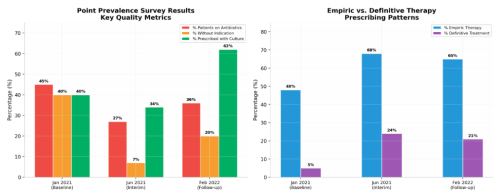
Figure 1. Point Prevalence Survey Results — Key quality metrics over three survey periods
The Point Prevalence Survey data showed major changes. At the start, 45% of hospitalized patients were on antibiotics — and a shocking 40% of those prescriptions had no medical reason. By the interim check, inappropriate prescribing with no indication had dropped to 7%. The follow-up survey at 13 months showed lasting improvement at 20%, showing the program held up even as patient conditions and seasons changed.

Figure 2. Ceftriaxone consumption dropped 57.4% from 2020 to 2021; inappropriate prescribing fell from 40% to 20%
The ceftriaxone story sums up our whole journey. This drug had become the hospital’s default — given to stroke patients, ACS patients, and anyone with a slightly abnormal lab value. Through daily intervention, education, and slowly building diagnostic awareness, ceftriaxone use dropped from 15.71% of total DDD to 6.69% — a 57.4% drop in just one year. This was not done by banning the drug, but by helping doctors see when it was really needed.
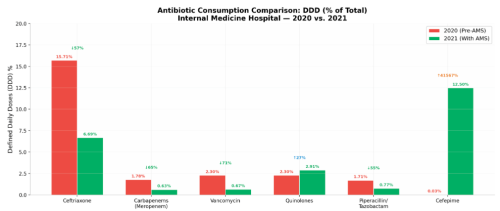
Figure 3. Defined Daily Dose comparison — 2020 (pre-AMS) versus 2021 (with AMS intervention)
The DDD analysis comparing 2020 (before AMS) to 2021 (with AMS) showed a clear shift in how antibiotics were used. Carbapenem use dropped by 65% (from 1.78% to 0.63% DDD), showing better first-choice prescribing and earlier step-down. Vancomycin dropped by 71% (from 2.30% to 0.67% DDD). Notably, cefepime — a more targeted, narrower-spectrum option — rose appropriately, proving that stewardship is not about using “fewer antibiotics” but about using the right ones.
Diagnostic Stewardship: Culture-Based Prescribing

Figure 4. Culture-based prescribing improved from 40% to 62%
Perhaps the most meaningful improvement was in diagnostic stewardship. The share of antibiotic prescriptions backed by culture results rose from 40% at the start to 62% at follow-up — a 55% relative gain. This shift shows a basic change in how doctors think: from guessing to using lab-based, targeted therapy. When doctors get cultures before prescribing, they make better choices, patients get more focused treatment, and resistance grows more slowly.
Summary of AMS Program Impact
Table 1. Key metrics comparing baseline (Jan 2021) to follow-up (Feb 2022)
| Metric | Baseline | Follow-up | Change |
| Patients on antibiotics | 45% | 36% | -20% |
| Prescribed WITHOUT indication | 40% | 20% | -50% |
| Prescribed WITH culture | 40% | 62% | +55% |
| Prescribed WITHOUT culture | 60% | 38% | -37% |
| Definitive treatment | 5% | 21% | +320% |
| Ceftriaxone DDD (2020 vs 2021) | 15.71% | 6.69% | -57.4% |
| Carbapenem DDD (2020 vs 2021) | 1.78% | 0.63% | -64.6% |
This Is Not My War — It Is Ours
THE CALL
Antimicrobial stewardship is not the fight of one clinical pharmacist, one doctor, or one infection control nurse. It is the fight of every doctor, every nurse, every infection control worker, every quality officer, every pharmacist, and every patient. AMR does not care about your specialty, your department, or your job title. Neither should our response.
I started alone. I worked part-time. I went back to the pharmacy to hand out medicines after rounds. But I started. And because I started, others followed. The residents began questioning their own prescriptions. The nurses began alerting doctors to reassess antibiotics before renewing them. The pharmacists came to me for approval before dispensing reserve antibiotics. The microbiologist’s reports became part of daily talk. What started as one person’s commitment became a shared mindset.
What You Can Do — Starting Today
- Physicians: Get cultures before prescribing. Question every antibiotic order. Step down based on results.
- Nurses: Alert the doctor to reassess before renewing antibiotics. Speak up for your patients. Remind teams to collect cultures.
- Pharmacists: Review every antibiotic order. Intervene on dose, duration, and duplicates. Lead by example.
- Microbiologists: Provide fast, accurate, and easy-to-read susceptibility data. Report resistance trends early.
- IPC Teams: Link infection prevention to antibiotic use. Track hospital infections and resistant organism spread.
- Leadership: Set aside resources for AMS. Champion the program. Make stewardship a quality priority.
The proof is clear. The need is urgent. The tools are ready. The CDC reports that focused prevention and infection control efforts in the U.S. cut deaths from drug-resistant infections by 18% overall and nearly 30% in hospitals before COVID-19 disrupted these gains [9]. We know what works. We just need more people doing it, in more places, more consistently.
We must move faster than resistance. Bacteria change in hours. Rules change in years. Our clinical decisions change in moments — every prescription written, every culture ordered, every conversation about stopping antibiotics. Those moments, multiplied across every hospital, every clinic, every prescriber on Earth, are the battlefield where this war will be won or lost.
“AMS is the key. It is the weapon in this war. And it is not a war fought alone — it is the war of all of us.”
Start where you are. Use what you have. Do what you can. The chain of resistance can be broken — one handshake, one conversation, one culture, one intervention at a time. Let us all start.
References & Readings
1. World Health Organization. Antimicrobial Resistance: Key Facts. WHO Fact Sheet, 2023.
2. Naghavi M, et al. (GRAM Project). Global burden of bacterial antimicrobial resistance 1990-2021: a systematic analysis with forecasts to 2050. The Lancet, 2024.
3. World Health Organization. Global Action Plan on Antimicrobial Resistance. WHO, 2015.
4. Health Policy Watch. WHA Member States Approve WHO Antimicrobial Resistance Strategy. June 2024.
5. CDC. Core Elements of Hospital Antibiotic Stewardship Programs. 2019/2022 Update.
6. CDC. Core Elements of Hospital Antibiotic Stewardship Programs — Summary of Recent Changes.
7. Hermans LE, et al. Association Between Antimicrobial Stewardship Programs and Antibiotic Use Globally. JAMA Netw Open, 2023.
8. Cheong HS, et al. Core Elements for Implementing Antimicrobial Stewardship Programs in Korean General Hospitals. Infect Chemother, 2023.
9. CDC. Antimicrobial Resistance Facts and Stats, 2025. Available at: cdc.gov/antimicrobial-resistance/data-research/facts-stats
RECOMMENDED TO YOU